Disclosure: This review may contain affiliate links. As an Amazon Associate, I earn from qualifying purchases—at no extra cost to you.

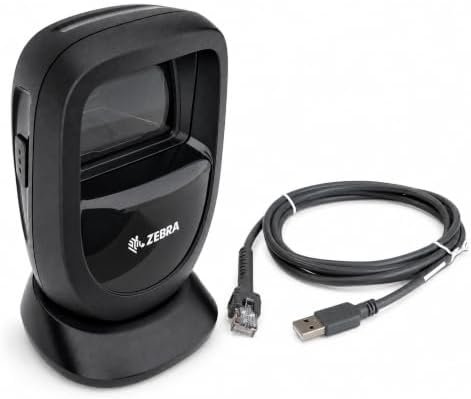
Retail environments depend on speed and accuracy at the point of sale. A scanner that struggles with damaged labels or digital coupons creates friction for both staff and customers. This analysis examines the Zebra DS9308 1D/2D Presentation Barcode Scanner with USB Cable, model SR00004ZZWW, based strictly on its confirmed Amazon listing data. We will break down the specifications, intended use cases, and key considerations to help you determine if this device fits your operational needs.
📊 Quick Specifications Table
✨ Key Features
This scanner is positioned as a solution for modern retail checkout. The confirmed feature set focuses on three core areas: scanning reliability, media versatility, and ease of deployment.
Advanced Scanning Core
The listing highlights an 800 MHz microprocessor paired with a high-resolution megapixel sensor. This hardware foundation works with Zebra’s PRZM Intelligent Imaging technology. The stated goal is to capture high-density, poorly printed, damaged, crinkled, faded, or low-contrast barcodes on the first pass. For a busy checkout counter, this reduces the need for manual entry and repeated scanning attempts.
Dual Media Support
Modern retail involves both physical labels and digital displays. This device is confirmed to read traditional printed barcodes on product labels. It also captures electronic barcodes presented on smartphone or tablet screens. This makes it suitable for processing mobile coupons, digital loyalty cards, boarding passes, and tickets directly from customer devices.
Plug-and-Play USB Setup
The package includes a genuine, shielded USB cable. The listing states that setup is plug-and-play, requiring no complex driver installations. It is confirmed to integrate with major POS cash register systems, Windows, Mac, and Linux operating systems. This simplifies deployment for IT staff and reduces downtime when adding new registers.
Space-Saving and Durable Build
The design is described as compact and stylish, intended to save valuable counter space in boutique environments or convenience stores. Durability is addressed with an IP52 sealing rating against dust and liquid spills. The unit is also engineered to survive multiple 5 ft. (1.5 m) drops to concrete, which is a practical consideration for high-traffic retail settings.
🎨 Design and Build Considerations
The physical footprint is a key advantage for this model. With dimensions of 5 inches in depth, 3 inches in width, and 3.07 inches in height, it is designed to occupy minimal counter space. This is particularly relevant for smaller checkout areas where every inch matters.
The IP52 rating provides a defined level of protection. The first digit (5) indicates protection against dust ingress that could interfere with normal operation. The second digit (2) indicates protection against vertically dripping water. This means the unit can handle minor spills and dusty environments, but it is not designed for immersion or high-pressure water exposure.
The drop specification is another important build quality indicator. Surviving multiple falls from 5 feet to concrete suggests a rugged internal structure. This is a critical feature for handheld use, where drops are a common accident. The “presentation” style implies it can sit in a stand for hands-free scanning, but it can also be lifted and used as a handheld device.

⚡ Performance Expectations
Performance should be evaluated based on the confirmed components and the intended use case. The combination of an 800 MHz processor and a megapixel imager is designed for fast image capture and decoding. The PRZM technology is Zebra’s proprietary image processing software, which is intended to enhance the scanner’s ability to read difficult barcodes.
The practical benefit is improved first-pass read rates. In a retail setting, this translates to faster checkout lines and fewer frustrated customers waiting for a barcode to register. The ability to read barcodes from screens is a significant performance factor. Digital displays can have glare, low brightness, or small barcode sizes. The imaging technology is designed to handle these variables.
It is important to note that specific throughput rates, scan distances, and decode speeds are not confirmed in the listing data. The performance expectations here are based on the category of device and the stated capabilities of the imaging engine. Actual performance will depend on the specific barcode quality, the environment, and the host system.
⚖️ Pros and Cons
Pros
- Versatile Media Reading: Confirmed support for both printed labels and electronic barcodes on screens.
- High-Performance Processing: The 800 MHz processor and megapixel sensor are specified to handle difficult barcodes.
- Simple Deployment: Plug-and-play USB connectivity with broad OS compatibility reduces setup friction.
- Compact Footprint: The small dimensions are ideal for space-constrained checkout counters.
- Rugged Construction: IP52 sealing and 5 ft. drop survival indicate a durable design for retail environments.
Cons
- Wired Connectivity Only: This model relies on a USB cable, which may not suit all mobile or remote scanning needs.
- Battery Powered: The listing specifies battery power, which may require monitoring of charge levels for continuous operation.
- Limited Confirmed Details: Specific scan distances, decode speeds, and exact compatibility lists are not fully detailed in the confirmed data.
🆚 Comparison with Similar Products
When evaluating this scanner, it is helpful to consider the broader category of presentation scanners. Simpler models on the market may only read 1D barcodes and struggle with damaged labels or screen-based codes. These are often less expensive but may lead to slower checkout times and more manual entry.
Check latest price and availability on Amazon
On the other end of the spectrum, more advanced enterprise scanners may offer wireless connectivity, multiple interface options, or additional data capture features. These come at a higher cost and may offer more than a standard retail checkout requires.
This Zebra model sits in a middle-to-upper tier position. It offers the critical feature of 2D and screen reading, which is becoming essential for modern payment methods and loyalty programs. The confirmed processing power and build quality suggest it is designed for continuous, demanding use. Buyers who primarily scan clean, printed 1D barcodes may find a basic model sufficient. However, those who need reliability with mobile payments and damaged labels should consider this device’s capabilities.

🛒 Buying Guide
Choosing the right barcode scanner requires a clear understanding of your specific workflow. Here are the key factors to consider based on the confirmed data for this model.
Assess Your Barcode Types
If your inventory uses only standard 1D barcodes, a simpler scanner may work. However, if you need to scan 2D codes like QR codes, or if you accept mobile payments and digital coupons, a 2D imager like this one is necessary. The confirmed ability to read from screens is a major advantage for modern retail.
Evaluate Your Counter Space
The compact dimensions of 5″D x 3″W x 3.07″H are a strong selling point for small checkout areas. If space is at a premium, this design is a clear benefit. If you have ample room, this may be less of a deciding factor.
Consider Your Connectivity
This model uses a USB cable. This is a reliable and common connection for POS systems. It is confirmed to work with Windows, Mac, and Linux. If your setup requires a wireless scanner for inventory management or line-busting, this wired model may not be suitable.
Review the Durability Needs
Retail environments are demanding. The IP52 rating and 5 ft. drop survival specification provide a baseline for durability. If your staff frequently handle the scanner, this ruggedness is a valuable feature. If the scanner will remain in a fixed stand, this may be less critical.
✅ Key Things to Verify Before Buying
Before making a purchase decision, it is prudent to verify a few details on the Amazon listing to ensure this product meets your exact requirements.
- Exact Cable Length: The listing confirms a USB cable is included, but the specific length is not stated. Verify this matches your setup distance.
- Stand Inclusion: The product is described as a “presentation” scanner, but it is not explicitly confirmed that a stand is included in the box. Check the listing images and package contents.
- Warranty Terms: The warranty is described as “Manufacturer Warranty.” Review the specific terms and duration on the listing page.
- Specific OS Compatibility: While Windows, Mac, and Linux are mentioned, verify that your specific POS software and operating system version are supported.
- Battery Details: The power source is listed as “Battery Powered.” Confirm the battery type, expected life, and whether it is user-replaceable.
❓ Frequently Asked Questions
Can this scanner read barcodes from a smartphone screen?
Yes, the confirmed features state that it can read electronic barcodes on smartphone or tablet screens. This makes it suitable for mobile coupons, loyalty cards, and digital tickets.
Does this scanner require software installation?
The listing states that it is plug-and-play with no complex driver installations required. It is confirmed to integrate with Windows, Mac, and Linux operating systems.
What types of barcodes can it scan?
It is confirmed to read both 1D and 2D barcodes. This includes standard product labels as well as high-density, poorly printed, damaged, crinkled, faded, or low-contrast codes.
Is this scanner suitable for a small retail shop?
Yes, the compact design is specifically noted to save counter space in boutique environments or convenience stores. The durable build and fast scanning capabilities are suited for retail POS use.
What is the connectivity method for this scanner?
This model uses a USB cable connection. A genuine, shielded USB cable is included in the box for immediate setup.
How durable is this scanner?
The listing confirms an IP52 sealing rating against dust and liquid spills. It is also engineered to survive multiple 5 ft. (1.5 m) drops to concrete.
🏁 Final Verdict
The Zebra DS9308 presents a compelling package for retail operations that need a reliable, fast, and versatile scanning solution. Its confirmed strengths lie in its powerful processing hardware, its ability to read both paper and screen-based barcodes, and its rugged, space-saving design. The plug-and-play USB connectivity simplifies integration into existing POS systems, making it a practical upgrade for many businesses.
This scanner is best suited for retailers who handle a mix of traditional products and digital transactions, such as mobile payments and loyalty programs. The durability features offer peace of mind for busy environments. The primary limitation is the wired connection, which may not be ideal for all workflows. However, for a fixed checkout counter, this is often a reliable and preferred option.
Based on the confirmed specifications, this is a professional-grade tool designed to improve efficiency and reduce friction at the point of sale. Buyers should verify the specific cable length and whether a stand is included to ensure it meets their exact setup needs. Overall, it is a well-rounded and capable device for modern retail environments.
Check latest price and availability on Amazon