Disclosure: This review may contain affiliate links. As an Amazon Associate, I earn from qualifying purchases—at no extra cost to you.

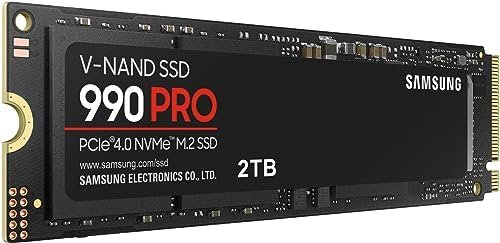
For users assembling a high-performance desktop, a workstation, or a gaming rig, storage speed is often the difference between a system that feels responsive and one that feels sluggish. The Samsung SSD 990 PRO 2TB (Model: MZ-V9P2T0B/AM) is positioned as a flagship PCIe 4.0 NVMe drive designed to address those demands. This analysis examines the confirmed specifications, features, and buyer considerations for this desktop component, focusing strictly on the data provided in the official product listing to help you make an informed purchasing decision.
📊 Quick Specifications Table
✨ Key Features
The feature set of this drive, as outlined in the official listing, centers on maximizing the potential of the PCIe 4.0 interface. The headline feature is the sequential read speed of up to 7,450 MB/s, which the manufacturer notes is near the theoretical maximum of 8,000 MB/s for the PCIe 4.0 standard. This is complemented by a sequential write speed of up to 6,900 MB/s. These figures position the drive for heavy workloads where large file transfers are common.
Beyond raw sequential throughput, the listing highlights a significant improvement in random performance, citing a more than 55% improvement compared to the previous generation 980 PRO. This is particularly relevant for operating system responsiveness, game level loading, and database access, where random read/write operations are frequent. The drive also incorporates Samsung’s in-house controller with smart heat control, which is described as delivering power efficiency while maintaining high performance levels.
Capacity options are available from 1TB to 4TB, with this specific model offering the 2TB configuration. This provides a substantial amount of space for game libraries, video editing projects, and data analysis datasets. The listing also confirms compatibility with the Sony PlayStation 5, making it a viable upgrade option for console storage expansion.
🎨 Design and Build Considerations
The physical design follows the M.2 2280 form factor, a common standard for modern motherboards and laptops. The dimensions are confirmed as 3.16 inches in length, 0.87 inches in width, and 0.09 inches in thickness. This compact size allows for direct installation onto a motherboard’s M.2 slot, eliminating the need for drive bays and cables. The drive weighs approximately 9.07 grams, making it a lightweight component that does not add significant bulk to a system.
The listing specifies that the drive is compatible with desktops and laptops, offering flexibility for users looking to upgrade an existing system or build a new one. However, it is crucial to verify that your motherboard or laptop has an available M.2 slot that supports PCIe 4.0 to achieve the stated performance levels. The drive’s design focuses on efficiency, with the smart heat control feature mentioned as a method to manage thermals without sacrificing performance. This is an important consideration for sustained workloads, where thermal throttling can impact speed.

⚡ Performance Expectations
Performance expectations should be grounded in the confirmed specifications and the capabilities of the PCIe 4.0 interface. The sequential read and write speeds of up to 7,450 MB/s and 6,900 MB/s, respectively, are the primary indicators of this drive’s capability. These speeds are designed for tasks such as transferring large video files, loading complex game environments, and handling large datasets in professional applications.
The improvement in random performance over the 980 PRO is another key factor. Random performance affects how quickly the system can access small files scattered across the drive, which directly impacts boot times, application launch speeds, and overall system snappiness. The listing also mentions power efficiency, with up to 50% improved performance per watt over the 980 PRO. This suggests that the drive is engineered to deliver high performance while managing power consumption, which can be beneficial for laptop battery life and desktop thermal management.
It is important to note that the maximum sequential speeds are achieved under specific test conditions, as detailed in the listing’s test system configuration. Actual performance will vary depending on your system’s hardware, firmware, and configuration. To maximize performance, the listing advises checking whether your system supports PCIe 4.0. If installed in a PCIe 3.0 slot, the drive will operate at lower speeds, though it will still function as a high-performance NVMe SSD.
⚖️ Pros and Cons
Pros
- High Sequential Speeds: Confirmed read speeds up to 7,450 MB/s and write speeds up to 6,900 MB/s, near the PCIe 4.0 limit.
- Improved Random Performance: The listing confirms a more than 55% improvement in random performance compared to the 980 PRO.
- Power Efficiency: Up to 50% improved performance per watt over the 980 PRO, according to the manufacturer.
- Multiple Capacities: Available in 1TB to 4TB options, with this model being the 2TB version.
- Broad Compatibility: Confirmed for use in desktops, laptops, and the Sony PlayStation 5.
- Solid Warranty: Backed by a 5-year manufacturer warranty.
Cons
- Requires PCIe 4.0: To achieve the maximum advertised speeds, your system must support PCIe 4.0. Older systems will see reduced performance.
- No Heatsink Included: The listing does not confirm an included heatsink. Depending on your motherboard, you may need to use your own M.2 heatsink for optimal thermal management.
- Specific Performance Conditions: Maximum speeds are based on a specific test system configuration and may vary in real-world use.
🆚 Comparison with Similar Products
When considering this drive, it is helpful to understand its position within the broader SSD market. This is a PCIe 4.0 NVMe drive, which represents a significant step up from SATA SSDs and older PCIe 3.0 NVMe drives. For users upgrading from a SATA SSD, the difference in sequential read and write speeds will be dramatic, resulting in noticeably faster boot times and file transfers. For those coming from a PCIe 3.0 NVMe drive, the upgrade to PCIe 4.0 offers a substantial increase in bandwidth, which is particularly beneficial for sustained heavy workloads.
Compared to entry-level or budget-oriented SSDs, this drive is positioned at the higher end of the performance spectrum. It is designed for users who require maximum throughput and are willing to pay a premium for it. The confirmed improvements in random performance and power efficiency over the previous generation also highlight its focus on overall system responsiveness and efficiency, not just raw sequential speed. For a typical user performing everyday tasks like web browsing and document editing, the performance difference between this drive and a more affordable NVMe drive may not be noticeable. However, for professionals working with large media files, developers compiling code, or gamers loading massive open-world titles, the performance characteristics of this drive are more likely to be utilized.
Check latest price and availability on Amazon

🛒 Buying Guide
Choosing the right SSD involves more than just looking at the highest number. Here are key factors to consider when evaluating this 2TB drive for your needs:
- Assess Your Workload: Consider the types of tasks you perform most. If you primarily use your computer for web browsing, email, and office applications, a high-end drive like this may be more performance than you need. However, if you work with 4K or 8K video editing, 3D rendering, large data analysis, or play the latest AAA games, the high sequential and random speeds will be a tangible benefit.
- Check Your System’s Interface: The most critical factor is whether your motherboard or laptop supports PCIe 4.0. The listing explicitly states that you should check your system’s support for PCIe 4.0 to maximize performance. If your system only supports PCIe 3.0, the drive will still work but will be limited to PCIe 3.0 speeds, which are around 3,500 MB/s. In this case, you might consider a high-quality PCIe 3.0 drive to save money.
- Consider Capacity Needs: The 2TB capacity is a sweet spot for many users, offering ample space for a large game library, multiple video projects, or extensive software installations. If you have more modest needs, a 1TB drive might suffice. If you work with massive datasets, the 4TB option provides more headroom.
- Evaluate Your Motherboard’s M.2 Slot: Ensure you have an available M.2 slot. The drive uses the M.2 2280 form factor, which is the most common size. Also, check if your motherboard includes a heatsink for the M.2 slot. While the drive has smart heat control, a dedicated heatsink can help maintain consistent performance during prolonged heavy use.
✅ Key Things to Verify Before Buying
Before making a purchase, it is prudent to verify a few details on the product listing to ensure this drive is the right fit for your specific setup. The information below is based on what is confirmed in the listing, but you should double-check the final product page for any updates.
- PCIe 4.0 Support: Confirm that your CPU and motherboard chipset support PCIe 4.0. This is essential for achieving the drive’s maximum sequential read and write speeds.
- Physical Space: While the M.2 2280 form factor is standard, verify that your motherboard or laptop has a compatible M.2 slot and that there is no physical obstruction preventing installation.
- Included Accessories: The listing does not confirm whether a heatsink or mounting screw is included. Check the product page for a list of box contents to see what is in the package.
- Warranty Terms: The listing confirms a 5-year manufacturer warranty. Review the full warranty terms and conditions on the manufacturer’s website to understand the coverage details.
- Firmware Updates: For optimal performance and stability, check the manufacturer’s website for any available firmware updates for the model number MZ-V9P2T0B/AM.
❓ Frequently Asked Questions (FAQ)
Is this SSD compatible with my laptop?
The product listing confirms compatibility with both desktops and laptops. However, you must verify that your laptop has an available M.2 2280 slot and that it supports PCIe 4.0 to achieve the maximum speeds. Some laptops may only have PCIe 3.0 slots, which will limit the drive’s performance.
Will this drive work in a PCIe 3.0 slot?
Yes, the drive is backward compatible with PCIe 3.0. It will function normally, but its sequential read and write speeds will be limited to the PCIe 3.0 bandwidth, which is approximately 3,500 MB/s. You will not achieve the advertised 7,450 MB/s read speed in a PCIe 3.0 slot.
Is this SSD compatible with the Sony PlayStation 5?
Yes, the product listing explicitly confirms compatibility with the Sony PlayStation 5. It can be used to expand the console’s internal storage. You should verify the console’s firmware requirements for M.2 SSD installation.
What is the difference between this drive and a SATA SSD?
A SATA SSD typically has maximum sequential read and write speeds of around 550 MB/s. This drive, using the PCIe 4.0 interface, offers speeds up to 7,450 MB/s read and 6,900 MB/s write. This represents a massive difference in bandwidth, leading to significantly faster file transfers and quicker loading times in applications and games that can utilize the higher speeds.
Does this drive come with a heatsink?
The product listing does not confirm that a heatsink is included in the box. Many motherboards come with M.2 heatsinks, which you can use. If your motherboard does not have one, you may want to purchase a separate M.2 heatsink to ensure optimal thermal performance during heavy workloads.
What is the warranty period for this SSD?
The product listing confirms a 5-year manufacturer warranty. This provides long-term peace of mind for your investment.
🏁 Final Verdict
The Samsung SSD 990 PRO 2TB is a high-performance internal solid-state drive designed for users who demand the maximum speed available on the PCIe 4.0
interface. Its confirmed specifications, including sequential read speeds up to 7,450 MB/s and write speeds up to 6,900 MB/s, place it at the top tier of what PCIe 4.0 storage can offer. The confirmed improvements in random performance and power efficiency over the previous generation make it a compelling option for those building a new high-end system or upgrading an existing one.
The 2TB capacity strikes a practical balance between storage space and cost, making it suitable for gamers with large libraries, content creators working with high-resolution media, and professionals handling substantial datasets. Its confirmed compatibility with desktops, laptops, and the Sony PlayStation 5 adds versatility, though the requirement for a PCIe 4.0 slot to achieve full performance is a key consideration for buyers with older systems.
For users with a PCIe 4.0-capable motherboard, this drive represents a strong investment in system responsiveness and data throughput. The 5-year manufacturer warranty provides a measure of long-term confidence. However, buyers should verify their system’s M.2 slot availability and whether a heatsink is needed, as the listing does not confirm one is included. If you are building a high-end desktop or upgrading a compatible laptop and require top-tier storage performance, this drive is a serious contender that aligns with the demands of heavy computing, gaming, and workstation use.
Check latest price and availability on Amazon